Every week someone messages us saying they want to do a Himalayan trek and have no idea where to start. Then they name a trek they saw on Instagram, and it is usually two grades above where they should begin.
So here is how grading actually works on our routes, and what to pick.
What the grades mean
Easy
Under 3,000 m. Short walking days on well-marked trails. No exposure, no snow, no technical sections. You will be tired and happy, not frightened. On our list this is Kheerganga — 12 km up through pine forest to a hot spring at 2,960 m, one night in camp, 12 km back down.
Moderate
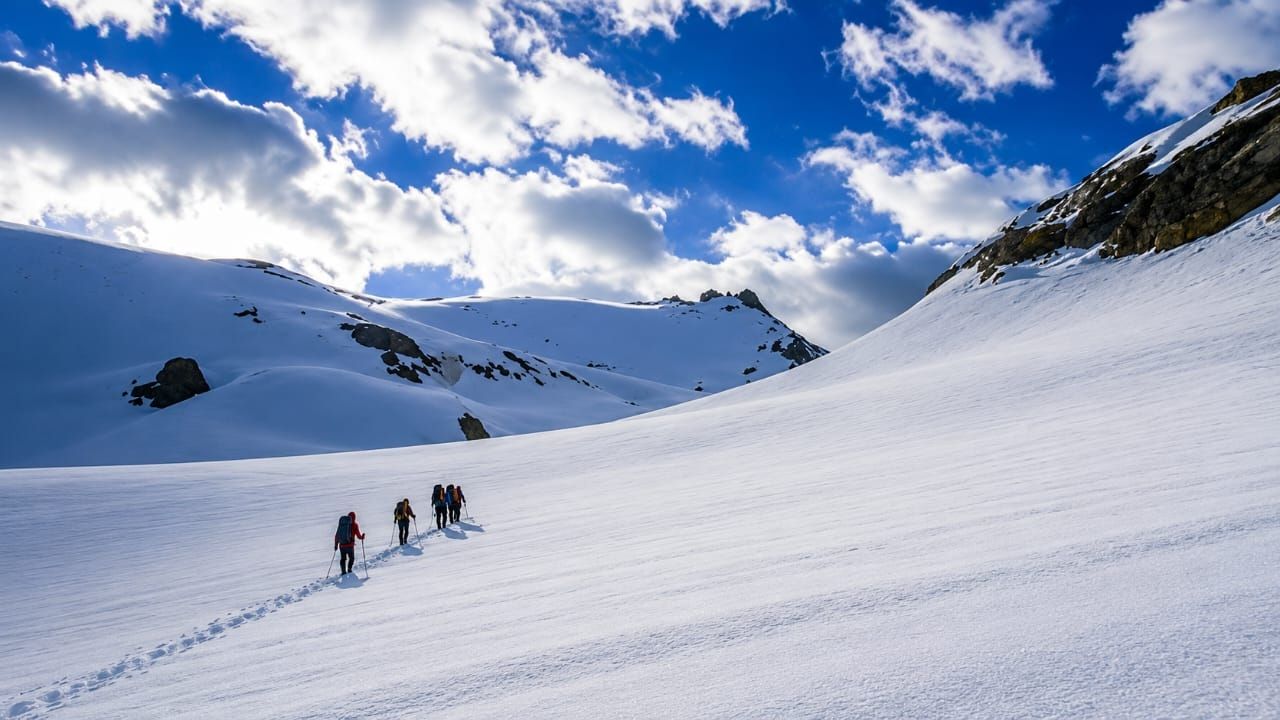
Up to about 4,300 m, with one long pass-crossing day, some snow, and river crossings. A genuinely fit beginner manages this well. Sar Pass and Hampta Pass both live here.

Difficult and above
Above 4,500 m, with glaciers, fixed ropes, technical snow and several consecutive nights at altitude. Previous high-altitude experience is not a suggestion here. Buran Ghati (15,000 ft, with a rappel off the pass) and Pin Parvati Pass (5,319 m) sit here.
The sequence that works
If you are starting from zero and want to reach a big pass within two or three seasons, this is the ladder we recommend:
- Kheerganga (2 days, easy). Find out whether you like sleeping in a tent before you spend real money on gear.
- Sar Pass (5 days, easy-moderate). Your first 4,000 m and your first snow. Ends with a kilometre-long snow slide, which nobody regrets.
- Hampta Pass (5 days, moderate). Your first proper pass crossing, with icy river crossings and a steep descent into Lahaul.
- Buran Ghati (7 days, moderate-difficult). Your first rope work and your first 15,000 ft.
- Pin Parvati Pass (9 days, very difficult). Glaciers, three nights above 4,200 m, and a crossing into Spiti.
Three mistakes first-timers make
1. Training only legs
Your legs are rarely the problem. Cardio is. If you can jog 4 to 5 km in about 30 minutes six weeks before departure, you will enjoy your trek instead of surviving it.
2. Buying the wrong jacket
A fashionable puffer is not a -10°C down jacket. On any moderate or harder route you need the real thing, plus a genuine waterproof shell. Rent from us if buying does not make sense yet.
3. Booking the shortest possible itinerary
Short itineraries save you two days and cost you your acclimatisation. The rest hikes and short first days in our plans are not padding — they are the reason people finish.
Start somewhere
Pick the grade below where your ego wants to be. Read the day-wise itineraries, work through the packing checklist, and message us if you want a second opinion on which route fits you.
Written by Priya Rawat, Monk Trails · Published 2 June 2026 · Shimla, Himachal Pradesh